Real or Fake Japanese Cards: How to Tell, and Who Checks
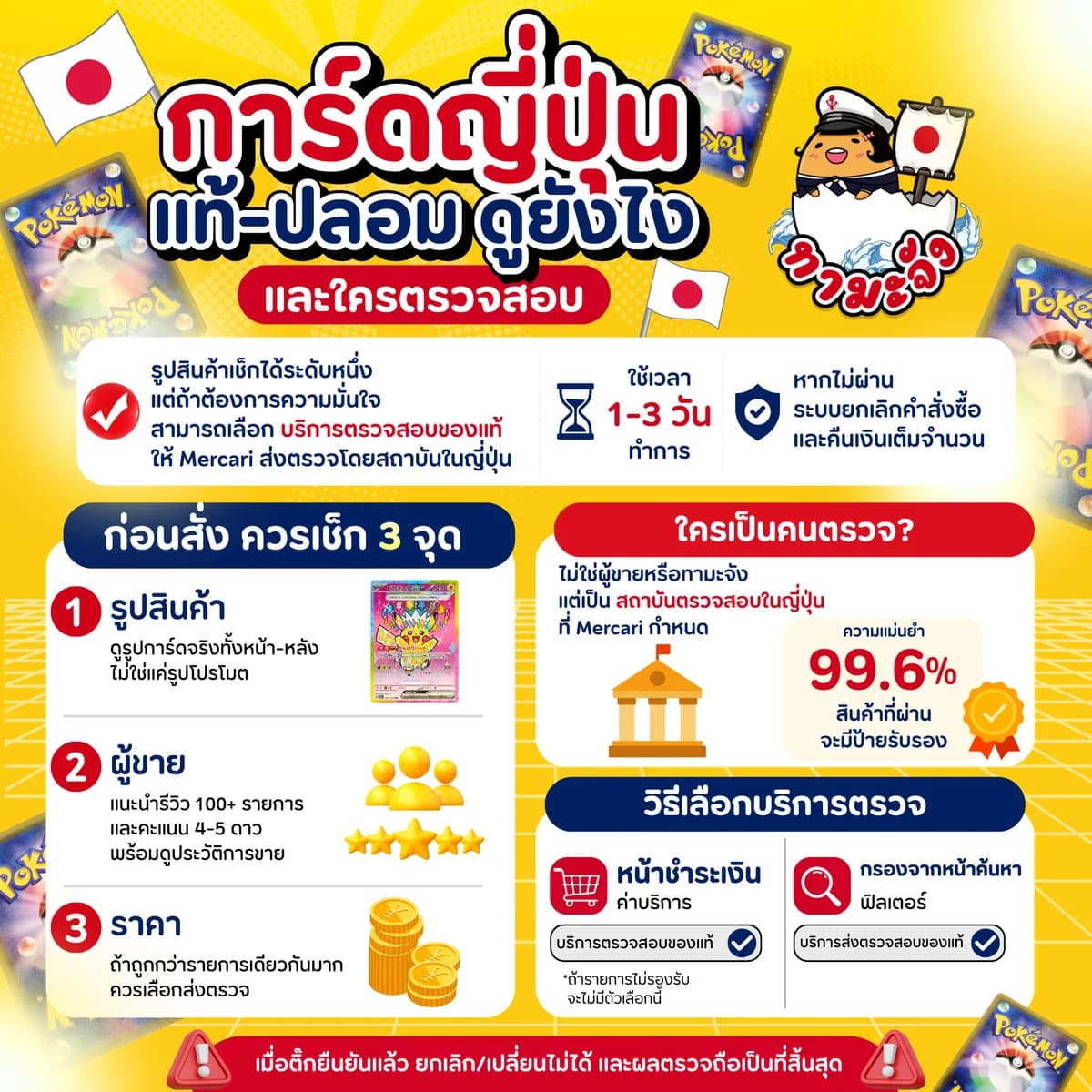
Listing photos only take you so far. The rest is settled by an inspection in Japan before the card leaves the country: 1-3 business days, and if it fails, the order is cancelled and fully refunded.
A single card runs from a few hundred yen into the high thousands, and the expensive end is exactly why fakes are worth making. From Thailand, all you ever see is the photos the seller took.
At the moment you order, the card is not in your hands. Two things are left to lean on: what the item page tells you, and having experts in Japan inspect it before it leaves the country — Mercari's own service, ticked at checkout.
Read the listing before you order
Photos say more than people expect. Someone who has shot the actual card, front and back, is not the same as someone posting a single promo image from the publisher. A promo shot does not mean fake — it means you have not seen the thing you are buying. Want another angle? Ask an admin on LINE to put the question to the seller before you order; the item page says as much under Condition.
The other half is the seller. The seller rating sits at the bottom of the item information box, so scroll — stars, then the review count in brackets. Tap the question mark beside it and you get the threshold Tama-Chan suggests: roughly 100 reviews or more, at 4.5 to 5 stars.
The seller name above it opens their profile. Someone listing cards steadily by the hundred and someone whose first ever listing is a rare single are quickest to tell apart there. A tick beside the name means they have verified their identity with Mercari.
A price far below every other copy of the same card is not proof of anything. It is a reason to use the check in the next section.
The authenticity check: who inspects, and what happens if it fails
The inspector is not the seller and not Tama-Chan. It is a leading institution in Japan that Mercari sends the item to, at 99.6% accuracy, and a card that passes comes back with a certification sticker.
So the card takes one extra leg: inspection first, one to three working days, then on to the warehouse.
What separates this from guesswork is what happens when a card fails — the order is cancelled and you are refunded in full. You are not left holding a fake and chasing it afterwards.
The tick lives on the payment screen, one of the last steps in the guide to ordering from Mercari. Look for the authenticity-check row under the service charges. If the item does not support it, the row simply is not there. Its fee sits at the end of that same row, and it is separate from the purchase service fee and the freight home, both on the fees and rates page.
The first time you tick it, a terms dialog opens and has to be accepted. You can reopen it any time from the button beside the row.
Two lines are worth reading before you confirm: once confirmed the service cannot be cancelled or changed under any circumstances, and Mercari's result is final, with neither side able to dispute it. If a card fails, there is no second opinion and no option to take it anyway.
Finding listings that offer the check
On the search page, hit the filter button at the end of the search box — on a phone it collapses to an icon. The panel drops down; tick the authenticity-check option under the guarantee heading and search.
Not every listing offers it. On 11 August 2026, of the first 12 results for ポケモンカード, nine could be sent for inspection and three could not. Cards in that sample ran ¥700 to ¥8,000 (about ฿150–1,680). Yen, because that is what the seller set and it is the same whoever looks — the baht figure is worked out from your own membership rate, so it differs by account. The baht in brackets is a rough conversion at about ฿0.21 to the yen, for scale only.
There is a category layer too: the check only covers the categories Mercari opens it to, such as branded goods and trading cards.
If ticking it brings up a notice that the authenticity filter is unavailable and all results are being shown, the filter is down for the moment and what you are seeing is unfiltered. Open items one at a time and look under the price instead — anything eligible carries the authenticity-check badge with its fee beside it.
Search from the Japan shopping page. If you are chasing the latest One Piece set, the detail is in the OP17 article.
Frequently asked questions
Read next
- How to Order from Mercari: Search, Haggle, Pay and TrackOrder from Mercari Japan yourself on Tama-Chan. No Japanese account needed: just follow the screenshots step by step.

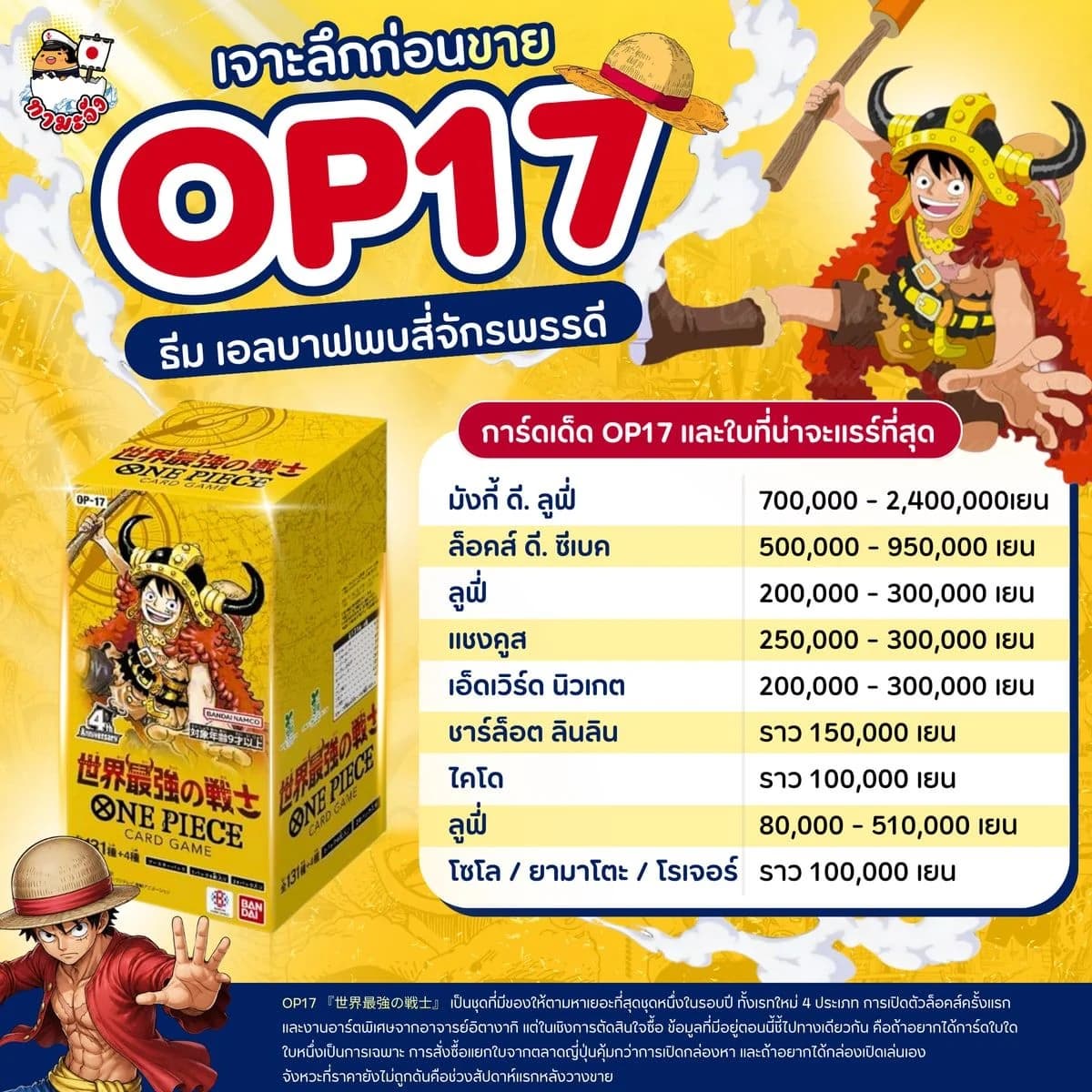
- When Does OP17 Release and Which Card Is Rarest? A Closer Look at One Piece OP 17Everything known about One Piece OP 17 『世界最強の戦士』 — the release date, the new box price, the four rarities introduced with this set, and the chase cards — plus what the pull rates say about opening boxes versus buying singles.
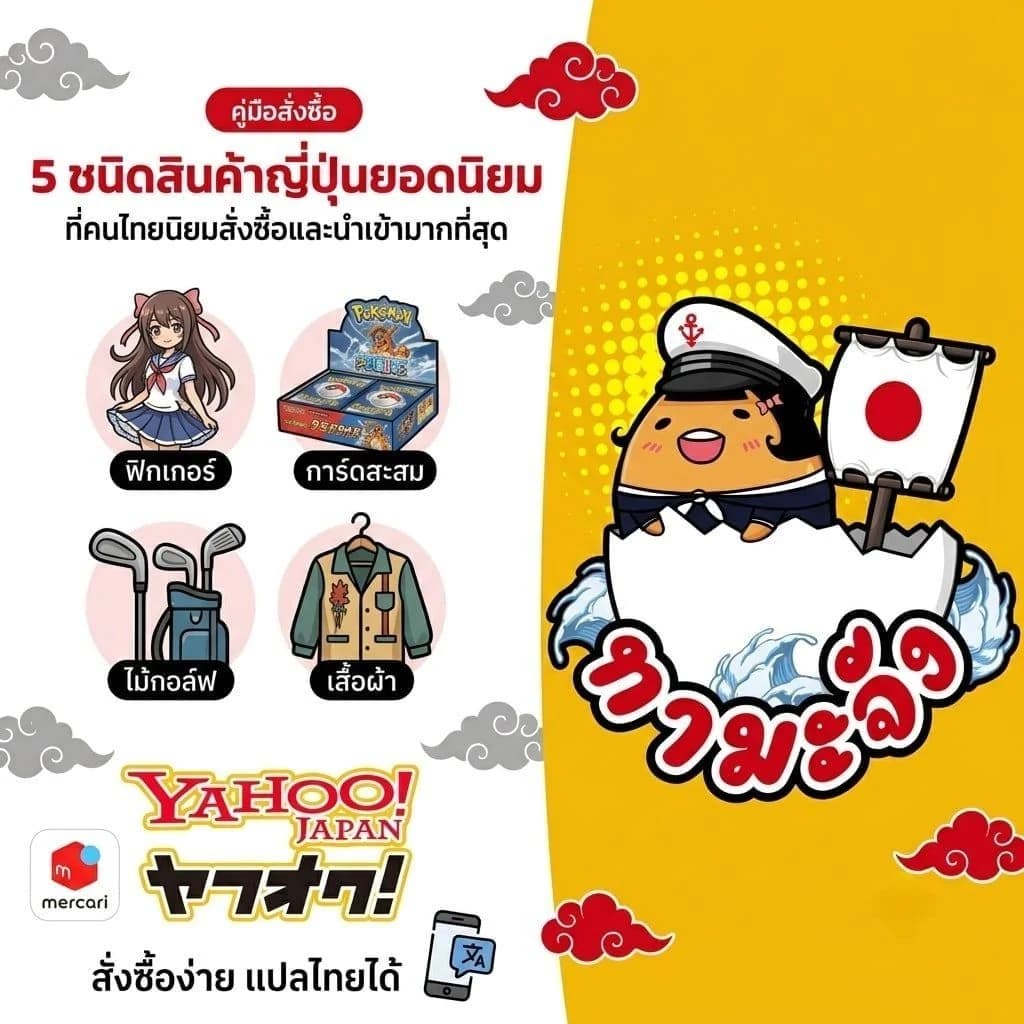
- 5 Most Popular Japanese Products Thai Shoppers Buy and ImportThe Japanese products Thai shoppers buy most through Mercari and Yahoo Auction — from figures and trading cards to auto parts, golf clubs, and second-hand clothing — plus how to start ordering them yourself.
- Open the Mercari Japan shopSearch Mercari with baht prices and Thai descriptions beside the original listing
Related keywords
- real or fake Japanese cards
- Japanese card authenticity check
- genuine Pokemon cards
Looking for Japanese cards? Start here
Search Japanese card listings yourself through Tama-Chan, or message an admin on LINE.