
Second-Hand Japanese Fishing Gear: What to Buy, What to Check
Plenty of the reels and rods Thai anglers hunt for are sold only in Japan, and the used ones there have been looked after. The rest comes down to reading the listing properly.
Most people looking at used Japanese tackle for the first time arrive from the same place: the model they want is not sold in Thailand, or it is sold here but in a different specification from the one in every Japanese video.
There is one of it, it sells once, and no restock is coming. You cannot return it and you never hold it before paying. The only way to know what you are getting is to read the description in full and ask the seller everything before you order.
Why Thai anglers go after used gear from Japan
Japanese anglers change gear often, and the people upgrading let the old one go while it is still perfectly good. Most of it has fished a few seasons and been rinsed and stored properly.
Then there are discontinued models. Many of them are not sold new anywhere anymore, which leaves the Japanese second-hand market as the only route — and stock turns over daily, from used-tackle shops and private sellers alike.
Domestic and export models share a name, not a spec
A reel with the same name can differ between the Japanese and the export version in spool, gear ratio, handle, and the materials inside.
The letters and numbers after the model name are what tell you. On a Shimano, C3000 means a 2500-sized body carrying a 3000 spool, and HG and XG are the high and extra-high gear ratios. Each maker runs its own code — Daiwa reads differently. Misread that line and you get a different retrieve rate from the one you meant to buy.
And a whole tier never leaves Japan at all — baitcasters and several rod families. If a model name turns up nothing in Thailand, it usually means it only ever sold on the Japanese market.
Reels, rods, lures — where to start
Reels are what people order most. Shimano and Daiwa account for almost the whole used market.
Rods are the other big group, particularly Megabass, Evergreen, Jackall and Zenaq, whose actions are split into narrow specialities that barely reach Thai shops.
If you are not ready to put your first money into a reel, lures and jigs are the cheapest way in. They sell in bulk lots under one listing, they weigh nothing and they box small.
What costs more is usually a flagship line, a current-generation model, or an item still complete with its box and spare parts.
What you should check before ordering a used item
You can always ask for close-ups of the parts that wear first.
On a reel, three things. How it turns — ask outright whether the handle grinds or catches anywhere in the rotation. The drag — whether it still backs off and locks in smooth increments. And corrosion, which always shows first at the screw heads, the reel foot, and under the handle knob; a listing that mentions saltwater use deserves a much closer look at those three spots. The one people forget is the spool: some listings are the body only, without the spare spool that came in the box.
On a rod, work through the guides one at a time in the photos. A cracked or chipped ring will eat line and part it mid-fight. Ask directly whether any section has been broken or repaired — a rod with a replaced tip is cheaper for a reason.
A listing that says no noticeable marks and still photographs the hairline scratches is more trustworthy than one that says mint condition with a single picture.
A rod is a long parcel — plan that part early
Reels and lures are small. A rod is a different problem: its packed-down length sets the size of the whole box. Two-piece and four-piece rods fit a normal carton; a full-length one-piece rod is worth asking about before you order. Freight on a box like that is charged on its dimensions rather than its weight — the routes and how they are calculated are on the shipping services page.
The other group to check first is anything with a lithium battery or internal pressure: electric reels and their battery packs, and pressurised cans. Read the list of what cannot be shipped to Thailand before ordering rather than finding out when it reaches the warehouse.
Everything from searching to the payment screen is in the guide to ordering from Mercari.
Frequently asked questions
Not if you want to fish it as it arrives — move on to a listing that states it turns normally. It means the seller makes no promise that it works and takes no returns. Some are merely stiff to turn; some have a broken gear inside. It is a bargain only if you are buying for parts or you service reels yourself.
Serviced yes, parts are the harder half. Reel cleaning and repair shops here handle Shimano and Daiwa routinely. Parts for a Japan-only model, though, usually have to be ordered from Japan as well — which you can do like any other purchase. A Japanese warranty card cannot be claimed in Thailand.
Yes. Items from different sellers can go out in one shipment once they are all at the warehouse in Japan. What to allow for is timing: the slowest seller decides when the shipment goes. If one item is not urgent, order it afterwards and let it catch the next shipment.
Read next
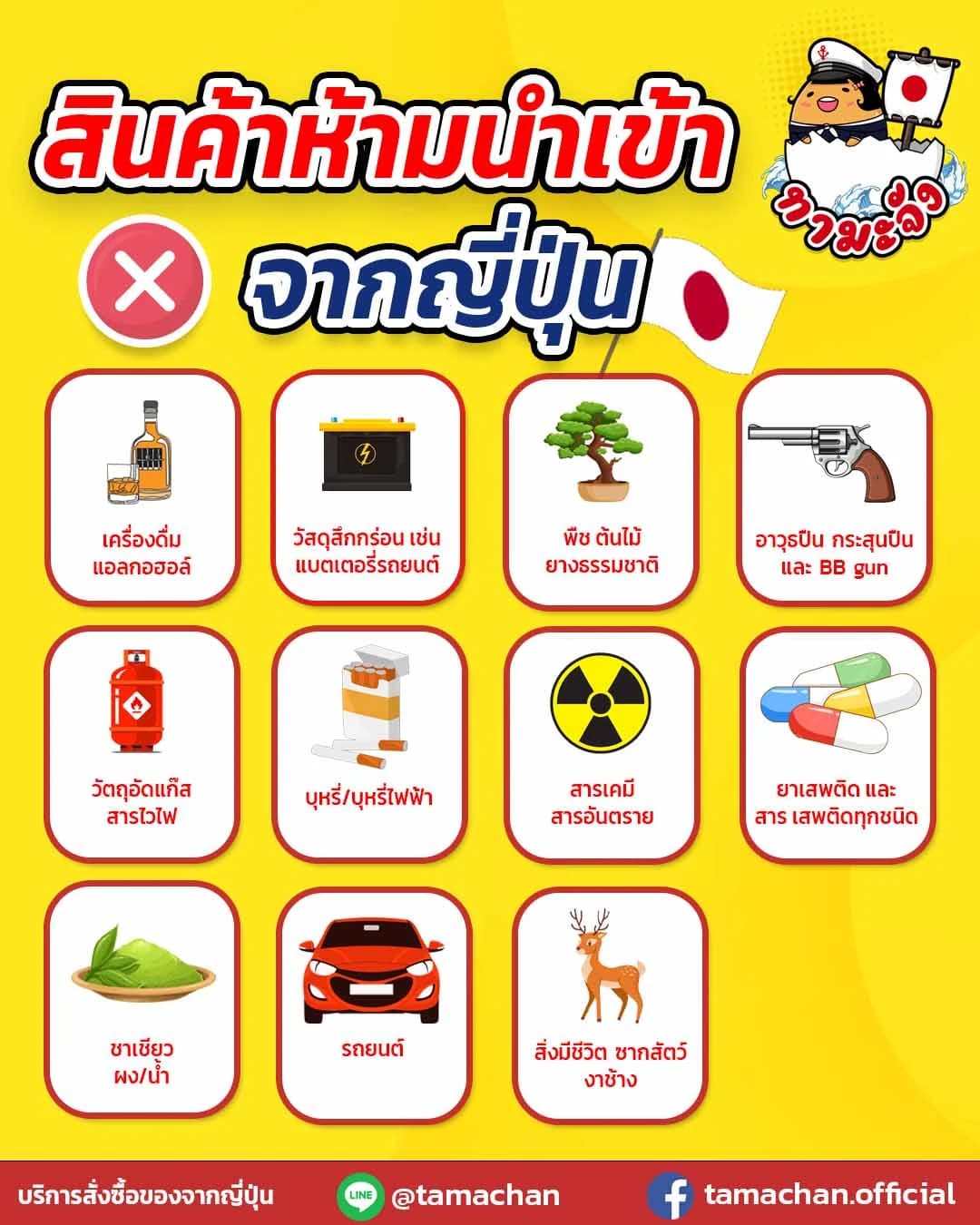
- Prohibited Items from Japan: All 11 We Cannot ShipThe 11 items Tama-Chan cannot ship back to Thailand, straight from the company's own notice — from alcohol, e-cigarettes and car batteries to powdered and bottled green tea.
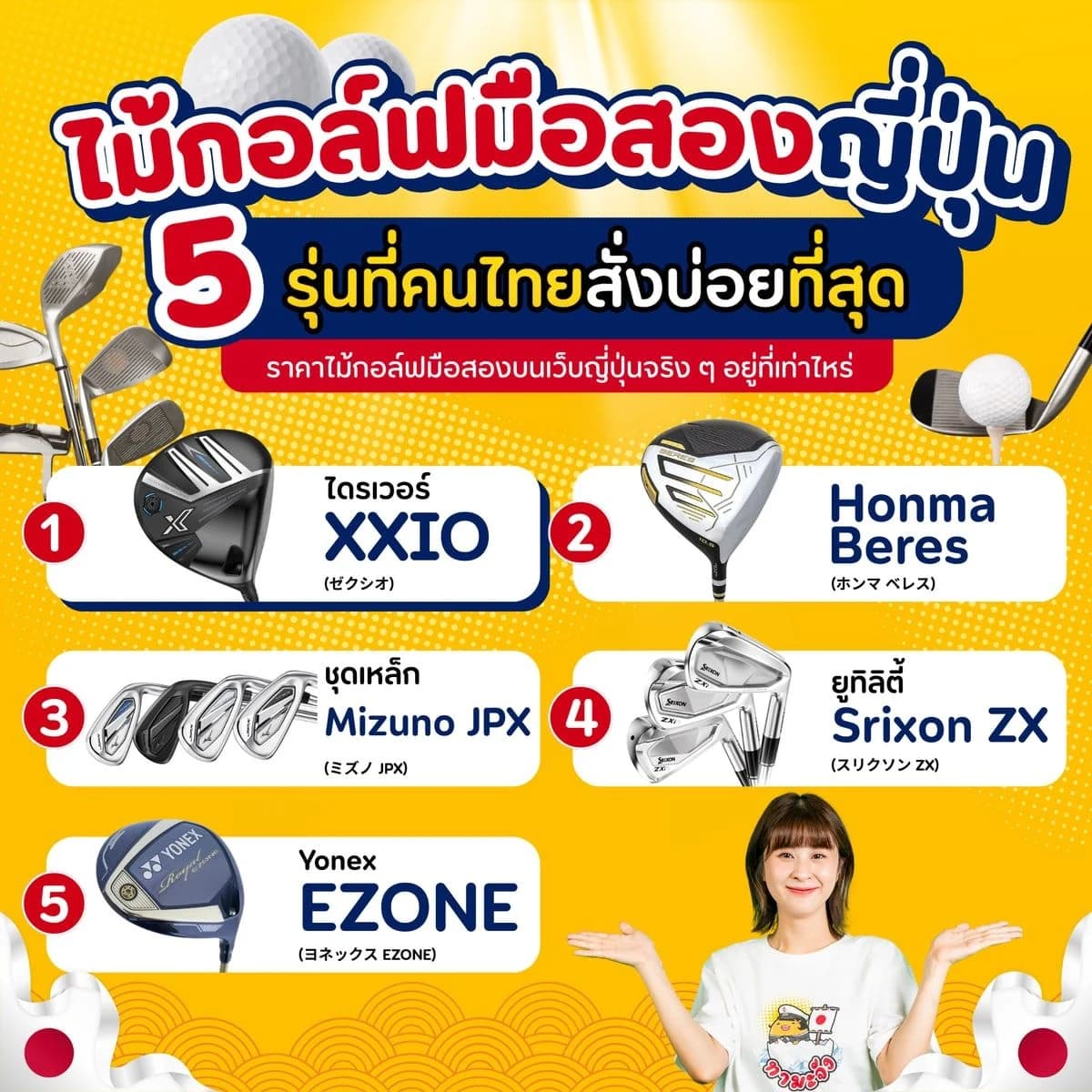
- Second-Hand Japanese Golf Clubs: 5 Families and What They CostWhat used Japanese clubs are actually listed at — five families, from XXIO drivers to Mizuno JPX iron sets, with the baht range each was selling in and the one spec worth checking before you buy.
- How to Order from Mercari: Search, Haggle, Pay and TrackOrder from Mercari Japan yourself on Tama-Chan. No Japanese account needed: just follow the screenshots step by step.

- Shipping from Japan back to Thailand, by sea or by airCompare the two shipping modes, the transit times, and the shipping rounds we run
Related keywords
- second-hand Japanese fishing gear
- used Japanese fishing rods
- used Japanese fishing reels
Want a reel or rod from Japan? Start here
Sign up and search Japanese tackle listings yourself through Tama-Chan, or message an admin on LINE.