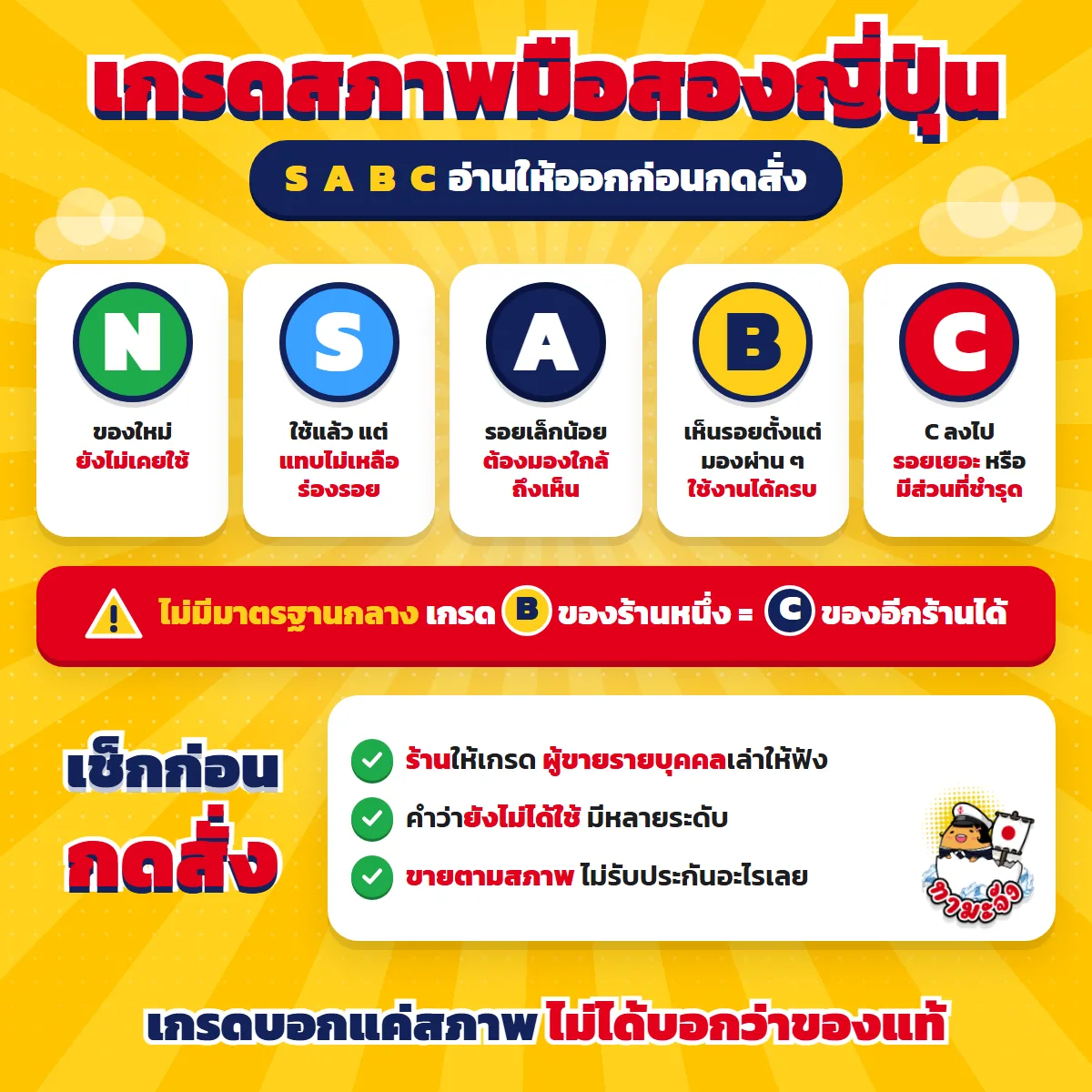
Japanese Second-Hand Condition Grades: What S, A, B and C Mean
The letters have no industry standard — one shop's B is another shop's C. Read them as shorthand for that one shop, and tell a graded verdict apart from a seller's opinion.
A used item exists once. You cannot handle it, you cannot send it back, and the only person who has seen it is the seller. Everything else is the text and the photos on the listing.
Japan's resale market built letter grades to make that readable fast. Before you trust one, work out who assigned it.
What S, A, B and C tell you, and why they do not compare across shops
Almost every major Japanese resale chain publishes its own letter scale, running roughly like this
- N brand new, never used
- S used, but with next to no trace of it
- A light marks, visible up close
- B marks you notice at a glance, fully functional
- C and below, heavy wear or something broken
No industry body decides what any of those letters means. Each chain writes its own scale, so one shop's B lands where another shop's C does. Read the letter as shorthand within that one shop, never as a score to compare between sellers.
A grade speaks only to condition, not to whether the item is genuine. That is a separate question, and some categories have an inspection before the goods leave Japan that settles it.
Shops grade. Private sellers describe.
A shop inspects every item against the same checklist and is liable if the description is wrong, so faults get written down even when they are tiny and change nothing. A private seller writes what they happened to notice. "Good condition" from someone who used it daily for three years and "good condition" from a shop that has just finished cleaning it are not the same claim.
The part people get wrong is the silence. A private seller saying nothing about scuffing on the base of a bag does not mean there is none — it means they did not turn it over. A shop saying nothing means they looked and found none.
"Unused" comes in several strengths
Japanese sellers separate unused goods more finely than Thai buyers are used to, and the price follows.
- Sealed: nobody has opened it, the seller included
- Opened but unused: taken out, looked at, maybe assembled, then put back in the box
- Used once: worn out of the house one time, or plugged in to check it works
Read all three as "new" and you will keep overpaying. In collectibles the price drops the moment the seal is broken. If the condition line only says unused and no photo has the box in frame, ask whether the box still exists.
Sold as-is means the seller promises nothing
Then there are items listed as sold as-is. The seller says up front that nothing is guaranteed to work and nothing comes back. The price drops hard because the whole risk has moved to you.
That is worth taking if you can repair it yourself, or if you are buying for parts. If you buy one to use and it does not work, you did not buy the wrong item — you bought exactly what was written. People hunting for car parts from Japan buy in this category as a matter of course.
Read the photographs before you order
Start by counting them. Someone selling seriously shows several angles — front, back, base, and a close-up of any fault they mention. If the text says there is a mark on the left edge and no photo shows the left edge, you still have not seen the thing they warned you about. A seller who zooms in on the flaw is worth more trust than one who writes "excellent condition" over a single shot.
The cheapest move available is asking for another angle. Tap the question-mark icon beside the "Product Condition" heading on an item page and the note is already there: to see other angles, message an admin on LINE and they will ask the seller for you. It costs nothing and almost nobody does it.
Get it answered before you confirm the order, because after that there is no going back. The full screen-by-screen sequence is in the step-by-step ordering guide.
Frequently asked questions
Read next
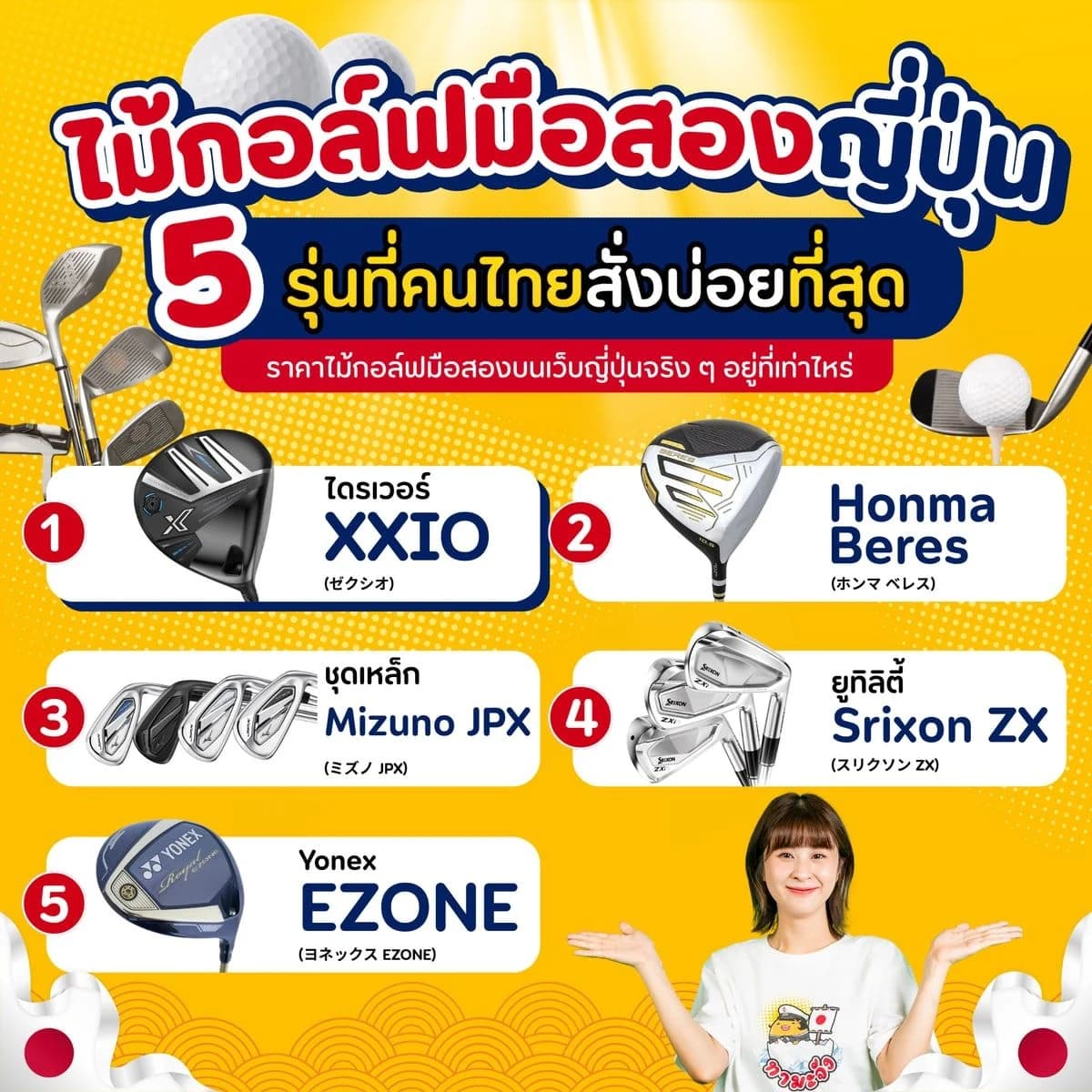
- Second-Hand Japanese Golf Clubs: 5 Families and What They CostWhat used Japanese clubs are actually listed at — five families, from XXIO drivers to Mizuno JPX iron sets, with the baht range each was selling in and the one spec worth checking before you buy.
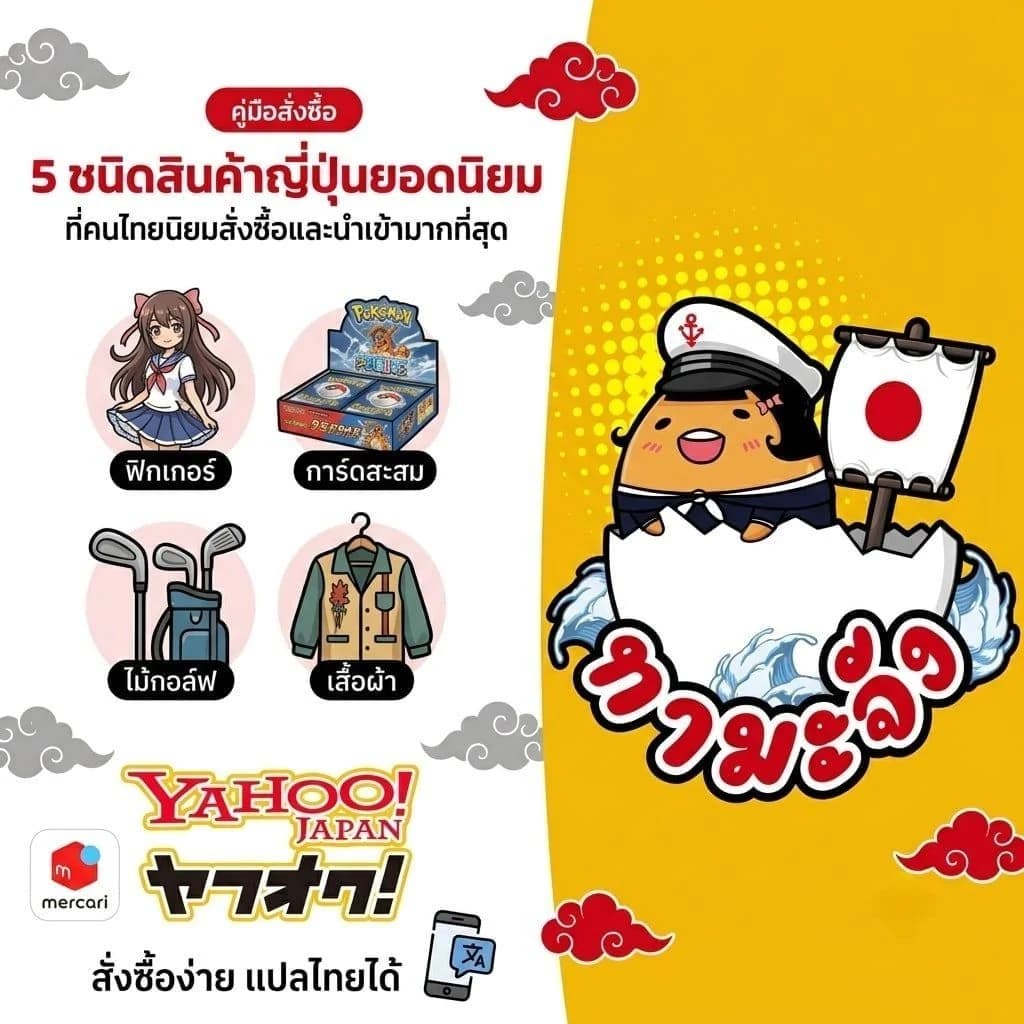
- 5 Most Popular Japanese Products Thai Shoppers Buy and ImportThe Japanese products Thai shoppers buy most through Mercari and Yahoo Auction — from figures and trading cards to auto parts, golf clubs, and second-hand clothing — plus how to start ordering them yourself.
- Open the Mercari Japan shopSearch Mercari with baht prices and Thai descriptions beside the original listing
- Service fee and shipping rate tablesCheck the per-item service fee and the sea and air freight rates before you commit
Related keywords
- Japanese second-hand condition grades
- judging used item condition
- Japanese resale grading letters
Ready to read a listing yourself?
Search used goods from Japan and read the condition line yourself, or ask an admin on LINE.