Second-Hand Japanese Game Consoles: Region Locks and Wear
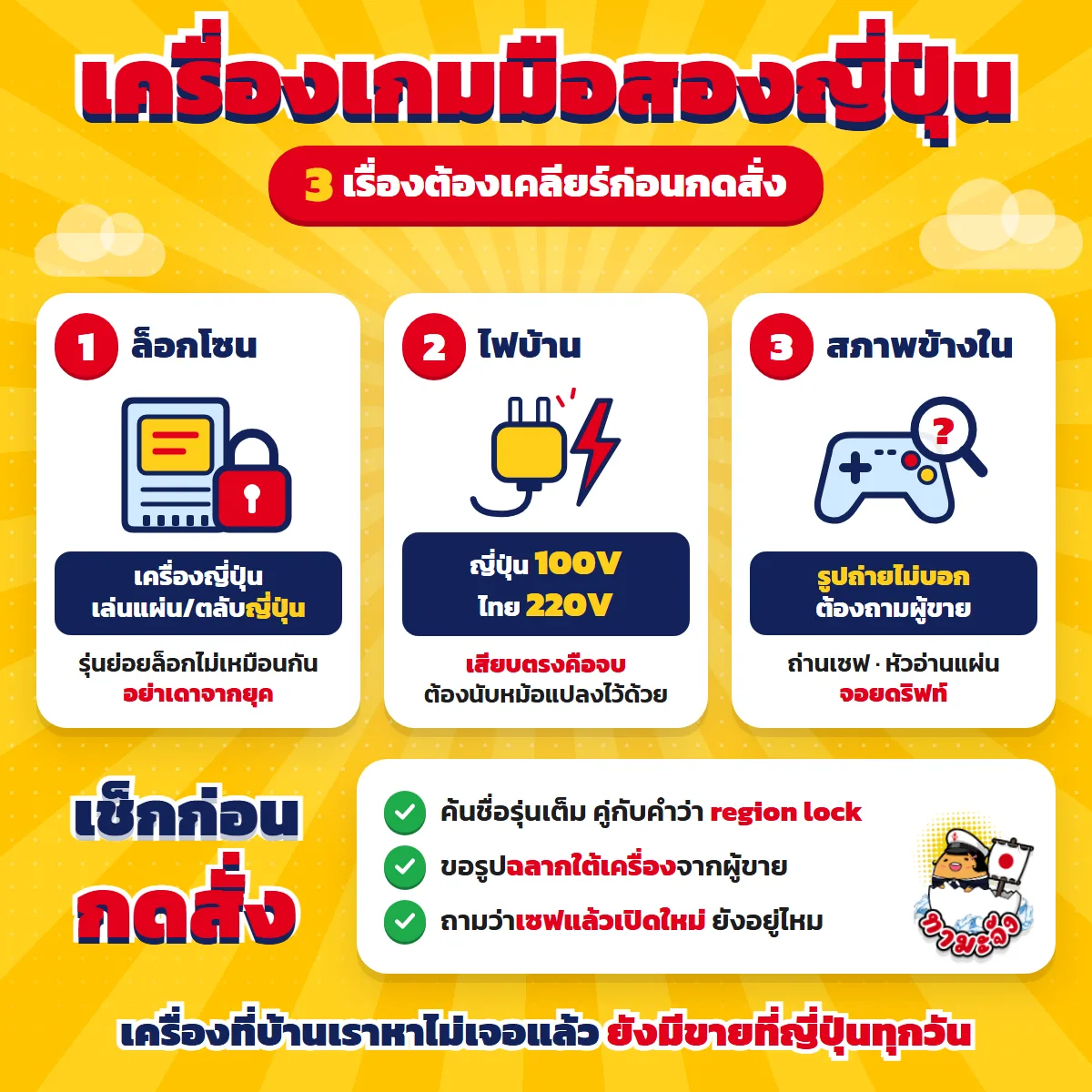
Consoles that vanished from shelves here years ago still change hands in Japan every day. Three things to settle before you order: what region the software is, mains power at a different voltage, and the condition inside that no photo shows.
Hardware that disappeared from Thai shelves a decade ago is still on sale in Japan — cartridge-era machines, the first disc consoles, handhelds long out of production.
A second-hand Japanese game console comes with conditions other collectables do not have. It has to power up and work, and it has to accept the discs or cartridges you plan to play on it. Both can go wrong while every photo on the item page looks perfectly fine.
Why the old hardware is still in Japan
Several console families launched in Japan first, some were sold only there, and a great many games never left the country at all. That is simply where the stock stayed.
The real difference is depth. Second-hand chains there have been buying old hardware back systematically for decades. Famicom and Super Famicom era pieces still fill shelves. Disc-era machines like the Sega Saturn, Dreamcast and the early PlayStation models turn up both boxed and as bare units. The Game Boy, Nintendo DS and PSP families run from collector-grade down to sold-as-seen.
Buyers here are usually after one of two things: a model never officially sold in Thailand, or a Japanese cartridge of a game that was never translated.
Region locking, or how a good console becomes a paperweight
Start from this: a Japanese console plays Japanese software. If you are buying one to play Japanese discs or cartridges, the question is settled already. The people who lose money are the ones who buy a Japanese unit because the price looked good, planning to play the discs sitting at home on it.
Broadly: cartridge-era machines lock at the cartridge — both the shape, which will not seat across regions, and circuitry inside the console that checks where the cartridge came from. Disc-era machines lock by a region code on the disc. Several handheld families are not locked at all, though some models within one family went back to locking, and a few later consoles dropped it entirely.
Sub-models within a family differ, so do not go by era. Before ordering, search the console's full model number together with "region lock" and read what that particular model locks. The model number is on the label underneath the console; if the item page has no photo of that side, ask the seller for one before you order.
The games are in Japanese. Can you still play them?
That depends on the genre far more than on your Japanese. Racing, fighting and sports games can be played through with almost no reading — the menus are icons and numbers, and you learn where things are once.
Role-playing games, adventures and strategy titles are another matter entirely. Quests, item names and skill descriptions are all text. If you cannot read it you cannot play it, and that is not the same as playing it with difficulty.
Newer consoles let you set the system language to English, but the game still speaks whatever the disc or cartridge speaks.
Age-related faults a photo will not show
Twenty- and thirty-year-old hardware degrades however carefully it was stored. Five things worth asking the seller about before you order.
- The save battery in old cartridges. Cartridges that save on board have a coin cell soldered inside. Once it is flat everything plays normally, and every save is gone the moment the power goes off. Most sellers never test that far, so if you plan to play it through, ask straight out whether a save survives a power cycle.
- A worn optical drive: some discs read and others do not, loading takes unusually long, or the spin is louder than it was. "Powers on fine" sometimes means only that the light comes on, with no disc ever tried.
- Analogue stick drift, where the character walks off on its own with nobody touching the stick. Controllers can be replaced, but that is money you will spend.
- Capacitors in the power section. On a nineties machine that has never had them replaced, symptoms range from not powering on, to a shaky picture, to a hum from the unit.
- Yellowed plastic: the most common and the least consequential, purely cosmetic.
Seller wording carries different weight too. Some state the unit was tested and works; others say plainly it is sold as seen with no guarantee it powers on, and that second group is cheaper for a reason. How to read those condition descriptions is covered in the guide to second-hand condition grades.
Mains power, and a box bigger than you expect
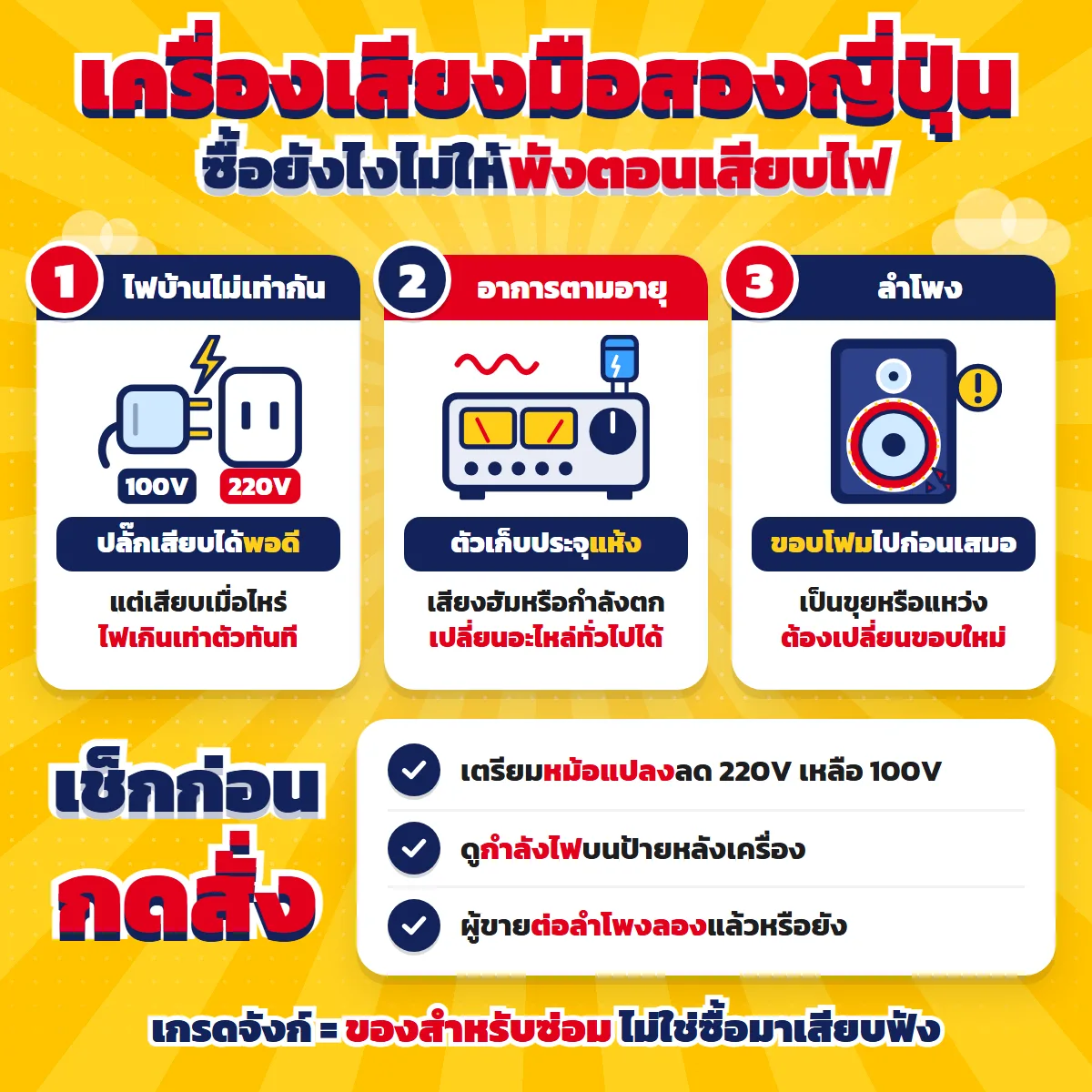
Japanese consoles and the adapters that come with them are built for a 100V supply. Thailand runs at 220V. Plug one straight in and that is the end of it, first time. A step-down transformer belongs in the same order, not on a later shopping list; sizing one to the console's draw is covered in the guide to Japanese 100V appliances.
A console with its original box takes up more room than people picture, because those boxes were packed out with protective foam. What really grows the carton is everything around the console: a spare controller, display cables, a converter to get a picture out of a modern screen, plus any cartridges or discs added to the order, which put on weight quickly.
For something this bulky, sea and air freight work out quite differently — compare them on the shipping services page. The ordering steps themselves are in the guide to ordering from Mercari.
Frequently asked questions
Read next
- Buying Second-Hand Japanese Audio Without Frying ItJapan built the golden age of hi-fi and most of it stayed there. But this gear is made for a 100V supply while our mains runs at 220V, and that has to be sorted out before you order.
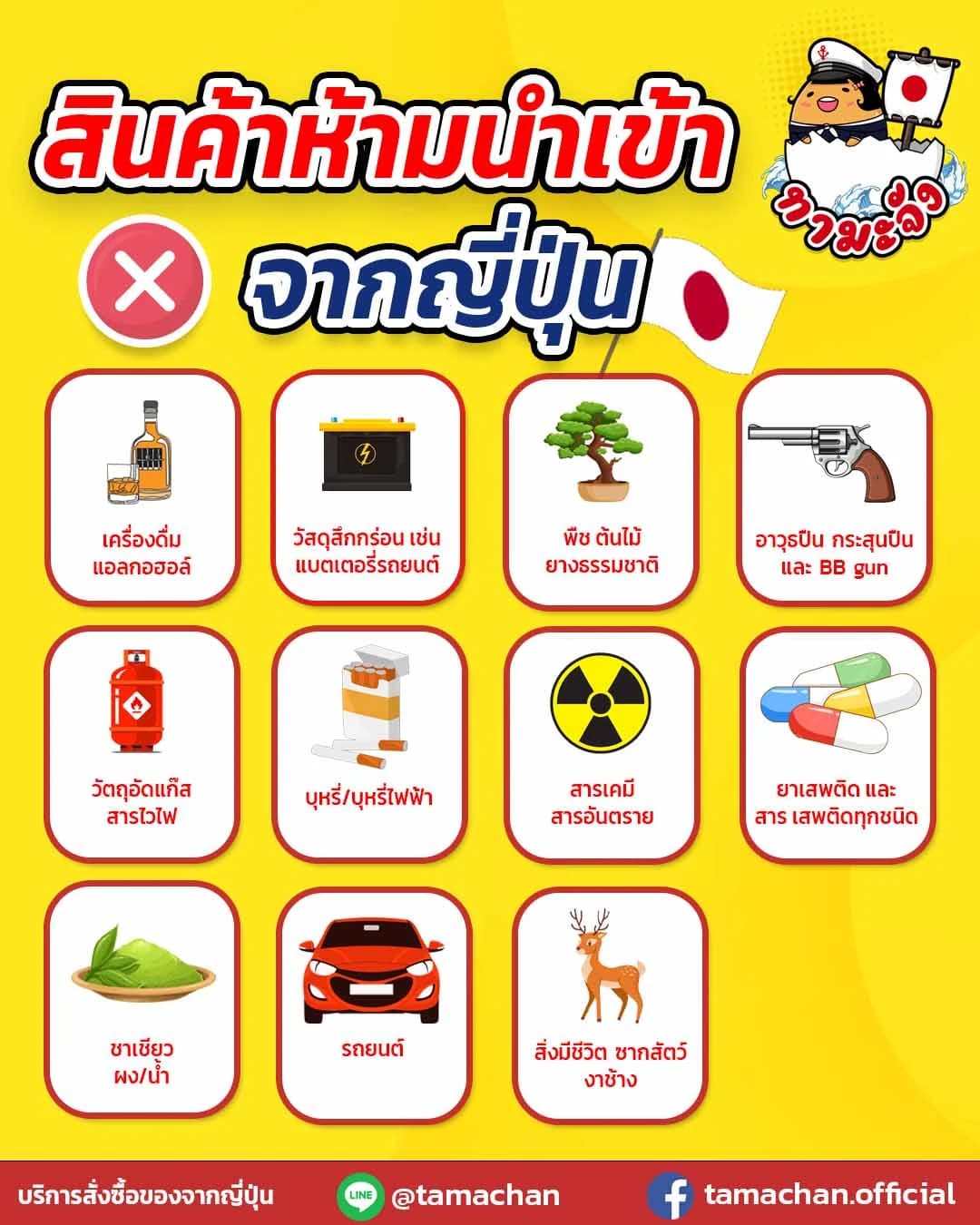
- Prohibited Items from Japan: All 11 We Cannot ShipThe 11 items Tama-Chan cannot ship back to Thailand, straight from the company's own notice — from alcohol, e-cigarettes and car batteries to powdered and bottled green tea.
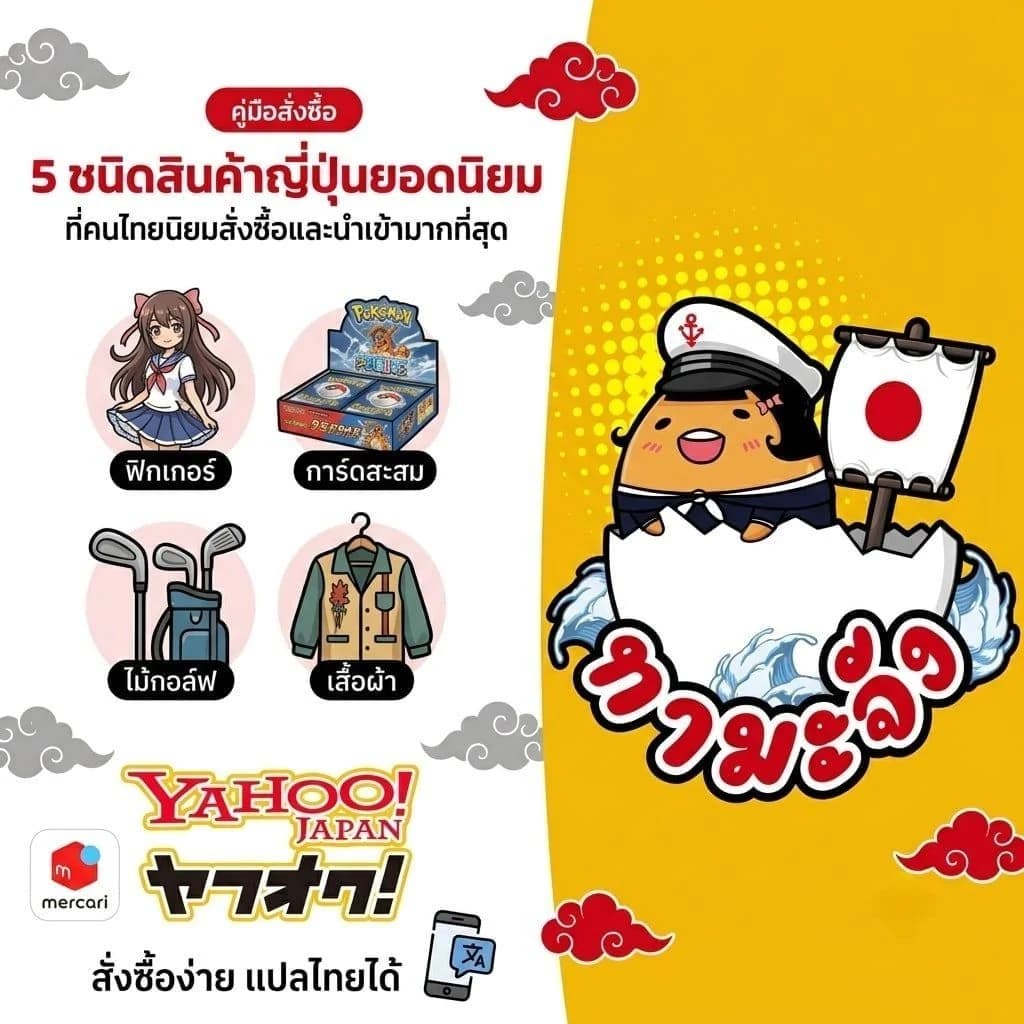
- 5 Most Popular Japanese Products Thai Shoppers Buy and ImportThe Japanese products Thai shoppers buy most through Mercari and Yahoo Auction — from figures and trading cards to auto parts, golf clubs, and second-hand clothing — plus how to start ordering them yourself.
- Open the Mercari Japan shopSearch Mercari with baht prices and Thai descriptions beside the original listing
Related keywords
- second-hand Japanese game consoles
- used Japanese games
- Japanese game cartridges
Looking for a console from Japan? Start here
Search Japanese consoles and cartridges yourself through Tama-Chan, or message an admin on LINE.