Second-Hand Japanese Film Cameras: What to Check Before You Buy
Japanese shops grade condition and write the faults down. Fungus and haze inside the lens, perished light seals and a shutter running slow are what the grade leaves out, and you have to ask about those yourself.
The camera looks fine from every angle, no dents anywhere. But fungus in the lens, light seals gone sticky with age, and a shutter running slower than the dial claims: none of that shows up in a photograph.
Japan has the best organised used camera market anywhere. The big chains grade condition against a scale published on their own site, and they list the faults they found, one by one, on the item page. How to read those grades is covered in the guide to second-hand grading at Japanese shops. The rest of this page is what the grade does not cover.
What a shop's grade tells you, and what it does not
The grade is mostly about the outside. Whether the shutter fires accurately at every speed, whether the meter still reads true, usually sits on a separate line, and plenty of listings never mention it at all.
The other half is who is selling. A dealer itemises the faults. Someone who found an old camera in a cupboard at home tends to say plainly that they have not tried it. That is not a bad sign about the camera, it means nobody has checked it, and it is where the lower price comes from.
The body: shutter, light seals and meter
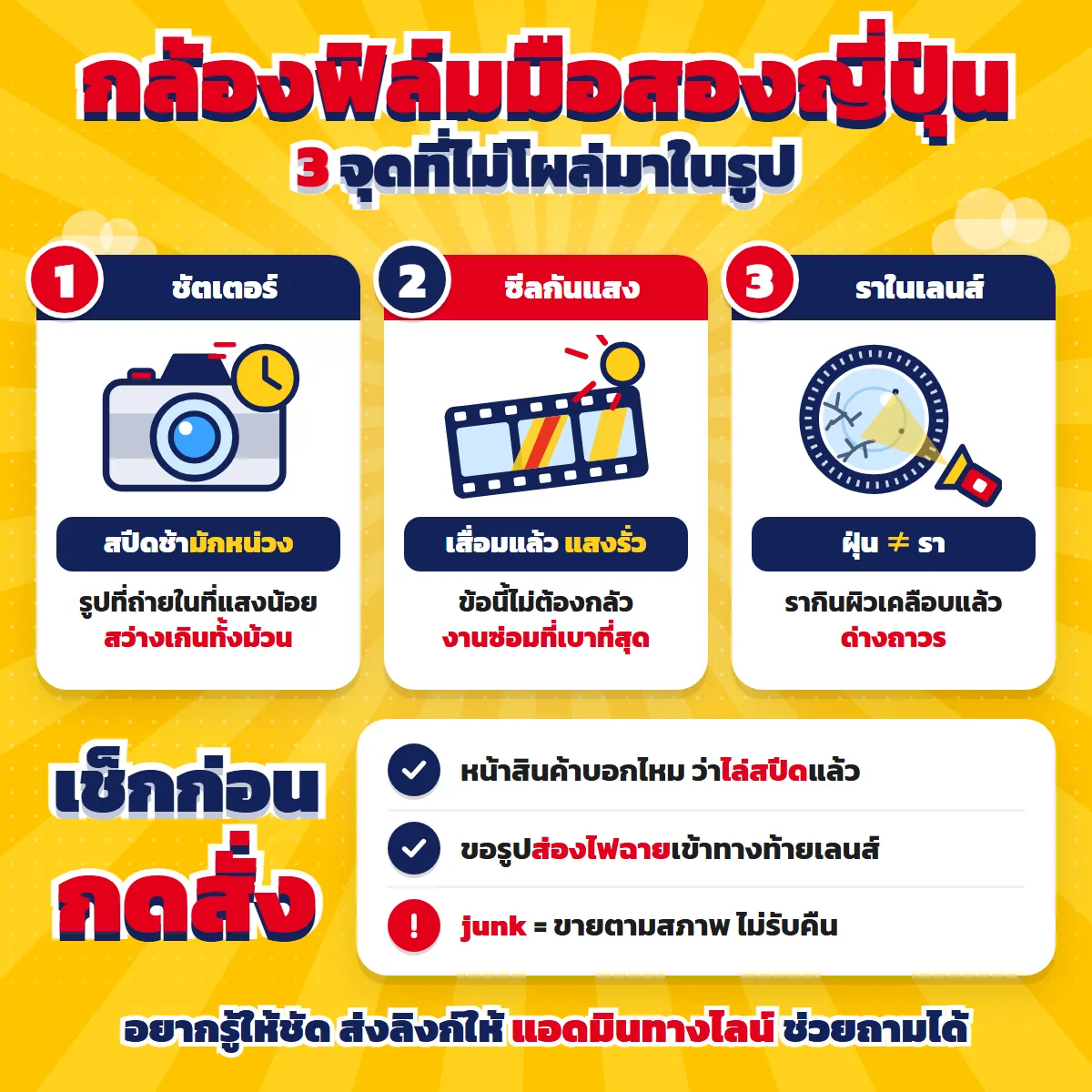
A camera that has sat in a cupboard for a decade will usually still fire, and it will even sound right. What drifts is the timing: the slow speeds hang, because the lubricant in the gear train has dried out. Low-light frames come back overexposed roll after roll. If the item page does not say someone ran through the speeds, assume nobody has.
The light seals around the back door are foam, and foam has a lifespan. When it goes it turns to sticky tar and light leaks onto the film in stripes. Do not be put off by that one: it is the cheapest repair on the whole camera.
Meters fail in two ways. The needle does not move at all, or it moves and reads wrong. The second is the dangerous one, because at a glance it looks healthy. A mechanical body shoots on with a dead meter and comes back from a service good for years. On a body that lets a circuit set the speed, a dead circuit usually has no replacement board to fit, and no amount of skill gets past that.
The lens: telling dust from fungus, and checking the blades
Dust is the specks sitting between the elements. Nearly every used lens has some and it hardly touches the image, which is why Japanese sellers note it flatly.
Fungus is a different animal. It grows as fine branching threads like a spider web, from the edge of an element inward. Caught before it eats the coating it cleans off; once it has eaten in, the etched patch stays for good. Haze is the thin milky veil across an element, mostly oil vapour off the aperture assembly, and it softens anything shot into the light. Separation is the third: the glue between two cemented elements lets go, showing as an irregular rainbow-edged patch near the middle. Repairable, but major surgery.
Look at the aperture blades too. Oil that has seeped onto them shows as a wet shine, and the blades go sluggish, so they will not stop down in time when you press the shutter. Every frame then looks shot wide open.
To settle it, ask the seller to shine a torch in through the back of the lens and photograph it from the front. Fungus and haze jump straight out in a shot like that when the listing photos showed nothing at all. Send the link to an admin on LINE and they will ask.
Cameras sold as junk, and when they are still worth it
Junk means sold as-is, no guarantee it works, no returns. It does not mean broken; often it means the shop never spent the time testing. What matters is telling two listings apart: the one that says the function has not been checked, and the one that names the fault. You can price the risk on the second, because you know what needs doing.
The cases where it is still worth the gamble are few.
- You were sending it for a full service anyway.
- The named fault is light work, such as the seals.
- You are buying it for parts for a body you own.
What is not worth it: an electronic body with no fault named at all, and a lens described as having fungus. Once it has left Japan there is nothing to send back.
Packing and getting it home
Film cameras are small and light, so freight is not the number to agonise over the way you would with something bulky. Pick sea or air on how long you are willing to wait; the two are compared on the shipping from Japan page.
Packing matters more. If you bought a body with a lens on it, take the lens off and pack the two separately, with the front cap, rear cap and body cap all on. A lens left mounted for the whole journey feeds every knock into the mount and the mirror box, the two most expensive things on the camera to put right.
If you bought from a Japanese shop yourself and are sending the parcel to the warehouse, the item price field is the value you declare: it is what the warehouse checks the parcel in against and what a loss claim is assessed on. The ordering steps themselves are in the step-by-step ordering guide.
Frequently asked questions
Read next
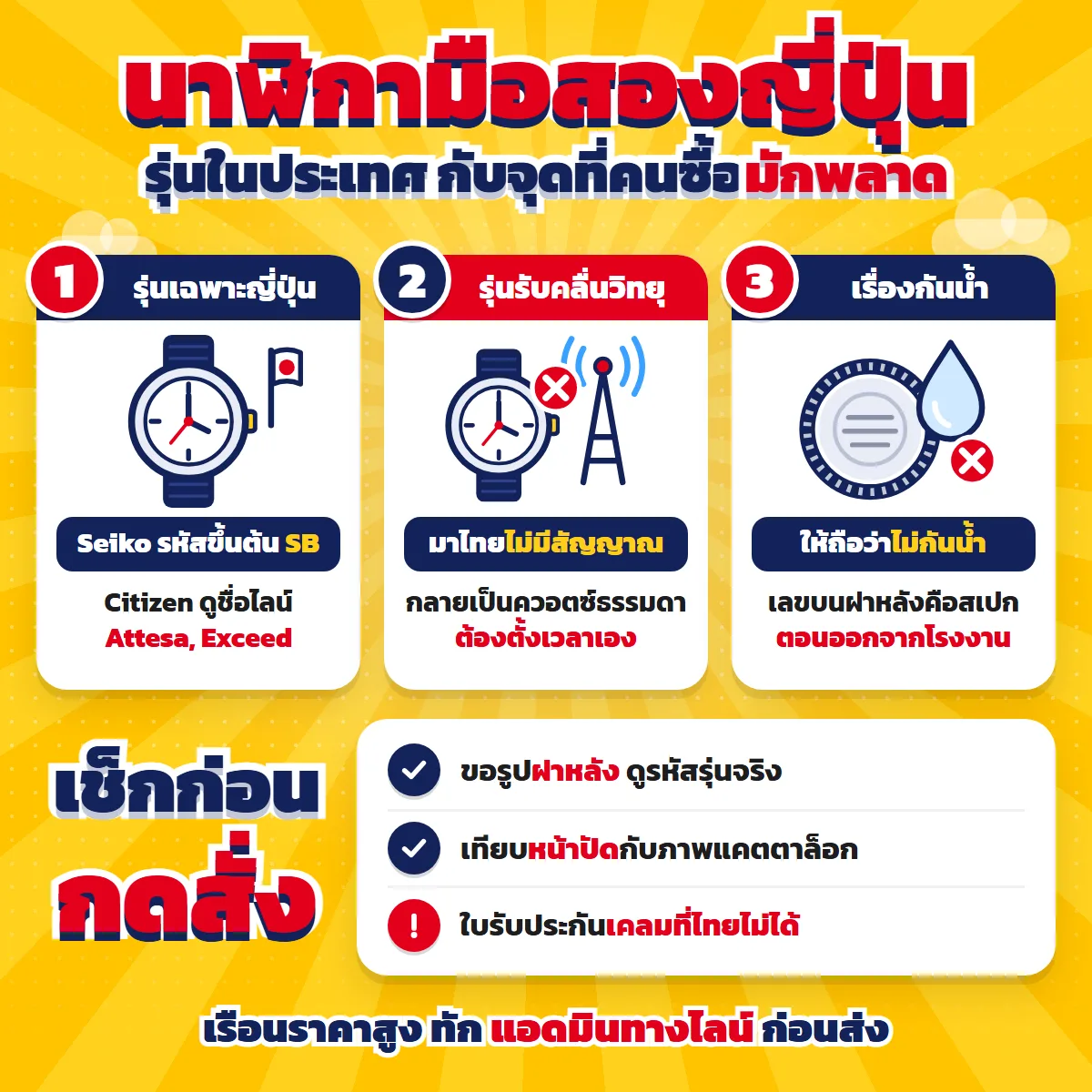
- Used Japanese Watches: Domestic Models and What Goes WrongSeiko and Citizen keep whole lines inside Japan, and the same model name can be a different watch depending on the market it was built for. What a seller can honestly confirm, and where buyers lose money.
- Second-Hand Japanese Luxury Bags: Who to Buy From, What to CheckJapan's resale shops authenticate every bag before it goes on sale. Private sellers do not. That difference counts for more than any spot-the-fake checklist — then you read the condition write-up.

- The full Japanese shop directoryEvery Japanese store Tama-Chan can buy from and ship home, grouped by what you are looking for
- Service fee and shipping rate tablesCheck the per-item service fee and the sea and air freight rates before you commit
Related keywords
- second-hand Japanese film cameras
- used Japanese cameras
- used Japanese lenses
Looking for a film camera from Japan? Start here
Sign up and search Japanese cameras and lenses yourself, or message an admin on LINE.