Second-Hand Japanese Luxury Bags: Who to Buy From, What to Check
Japan's resale shops authenticate every bag before it goes on sale. Private sellers do not. That difference counts for more than any spot-the-fake checklist — then you read the condition write-up.
Everyone about to order a bag from Japan is afraid of the same thing: that what arrives is not real. Listing photos cannot settle it, however far you zoom in.
Japan's second-hand market does not answer that by teaching buyers to authenticate. It answers it by having someone inspect the bag before it is ever listed. What is left for you to read is the condition, written up in more detail than most Thai buyers are used to — an overall grade, then every mark one at a time. How those grades work is already covered in the guide to second-hand condition grades.
Why bags from the Japanese market arrive still worth carrying
In Japan, using a designer bag for a couple of years and then passing it on is ordinary behaviour, not a sale made under pressure. Bags leave their owner while there is still life in them, and someone who knew from day one that it would be resold kept the box, the dust bag and the card.
The other half is the buying side. Resale shops are everywhere and they compete for stock, so bags turn over quickly. Discontinued models and colours that only ran for one season keep surfacing — which is the main reason Thai buyers look to Japan rather than anywhere else.
Who actually authenticates the bag
This is where the market splits. On one side are resale businesses: they buy stock in, authenticate it before it is listed, and put the shop's name behind every bag that leaves. On the other are private sellers listing their own things — selling in good faith, for the most part, but with no inspection step in the middle.
Authentication is a job people do professionally. A shop taking stock in every day has staff who have handled the same model a thousand times, and the whole business is on the line if one wrong bag goes out. Buying from someone who does not authenticate means you are carrying that risk yourself.
On a site that carries both sides, the first thing to establish is who the listing belongs to. Where the seller is a private one, some listings let you add an authenticity check at the payment step, and branded goods are one of the categories it covers; the terms are in the article on the authenticity inspection service.
As for the spot-the-fake tips passed around online, from stitch spacing to codes stamped inside the hardware: do not decide on those. Fakes have caught up with every one of them, because the people making them read the same lists you do.
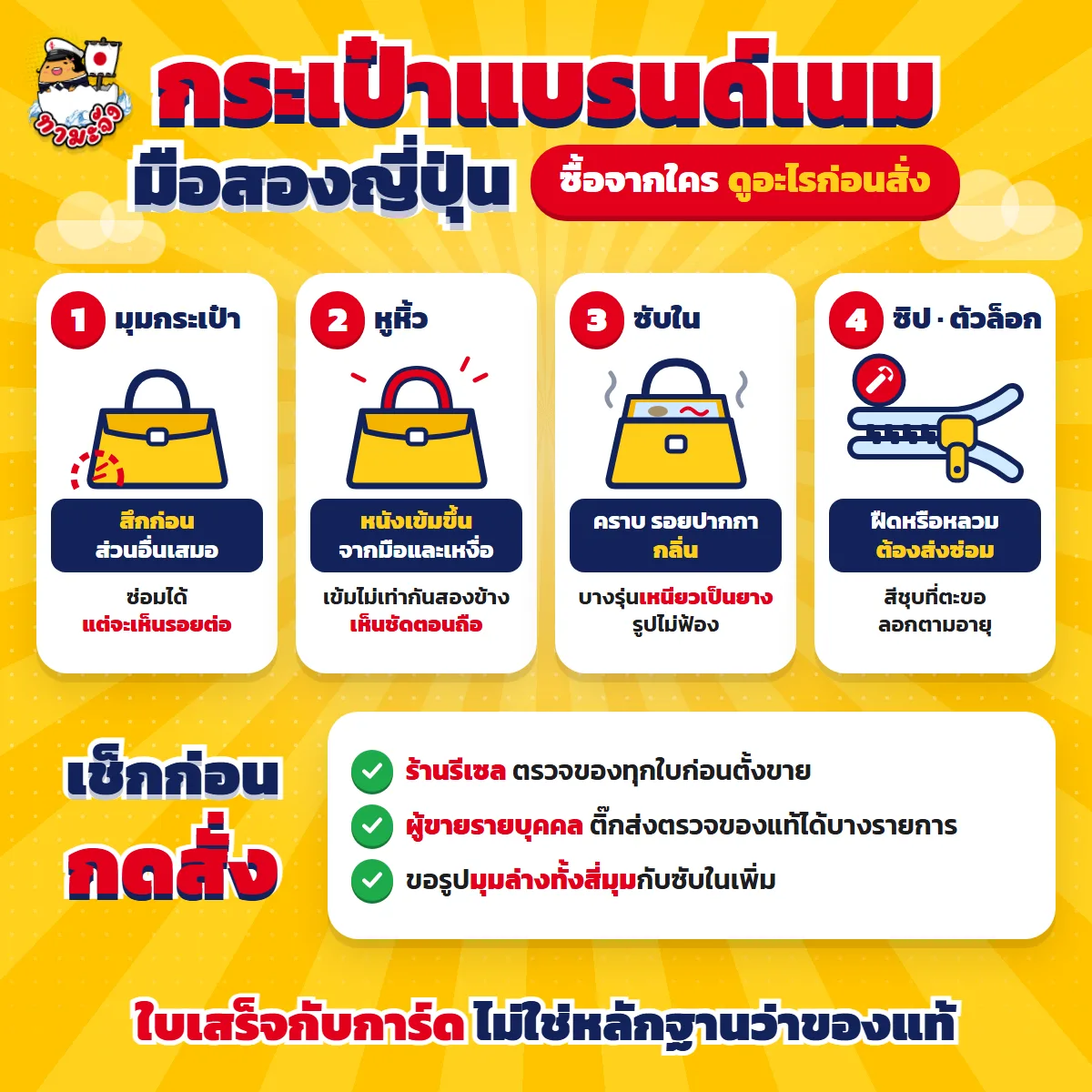
Read the condition notes where a bag actually wears
The overall grade gives you the wide shot, but no bag wears evenly. There are only a few places to look for in the write-up.
- Corners and bottom edges go first, always. If the notes say the leather is scuffed through to the layer underneath, or discoloured, it can be repaired — but that means replacing that piece of leather, and the join shows.
- Handles and straps darken from hands and sweat. Plenty of buyers like the patina; what catches people out is two sides that have darkened unevenly, which is obvious once the bag is in your hand.
- The lining: stains, pen marks and smell. A thorough shop tells you where each stain is. A note about a lingering smell usually means cigarettes or perfume that airing does not shift. Some linings also turn tacky with age, and that one the photos will not show — you get it only from the text.
- Metal fittings. Plating wears off clasps, zips and base studs with age. If the notes mention a stiff zip or a loose clasp, that is a repair, not a cosmetic flaw.
The faults that affect daily use are the zip and the clasp. The rest is a matter of what each buyer is willing to live with.
Box, dust bag and receipt: what it means when they are missing
Full sets turn up often in Japan, because people kept them from the start. But an incomplete one is not a warning sign; on a bag that has changed hands a few times, the box is usually the first thing to go.
Worth being clear about: a receipt or a card proves nothing about authenticity. Paper is far easier to fake than the bag, and a genuine receipt does not necessarily belong to the bag in the photos. What it is actually good for is provenance and the year of purchase.
The dust bag is the piece worth having, because it is the one you will use to store the bag; if it is missing you can buy one separately. The box matters more when you come to resell than while you are using it.
What photos leave out, and getting it home
Photos do not carry smell. They do not tell you whether the zip runs smoothly, whether the magnetic closure still grips, or whether the bag holds its shape when set down empty. Colour shot in a shop can be a long way from the colour in daylight, particularly on pale leather that has yellowed with age.
All of that can be asked before you order. Message an admin on LINE to put the question to the seller or the shop in Japanese, and to request extra photos of specific spots — all four bottom corners and the lining, typically. Resale shops field these questions as routine.
When it comes to getting the bag home, one bag is a small parcel carrying value out of all proportion to its size, so freight cost is the wrong number to choose on. Read two other things first: whether the declared value in the system matches what you actually paid, and what the liability actually covers: a parcel lost after it reaches the warehouse is covered to THB 2,000 per tracking number, and damage is not insured. For a bag worth more than that, talk to an admin before it is sent. The full terms are in the forwarding service guide.
Frequently asked questions
Read next
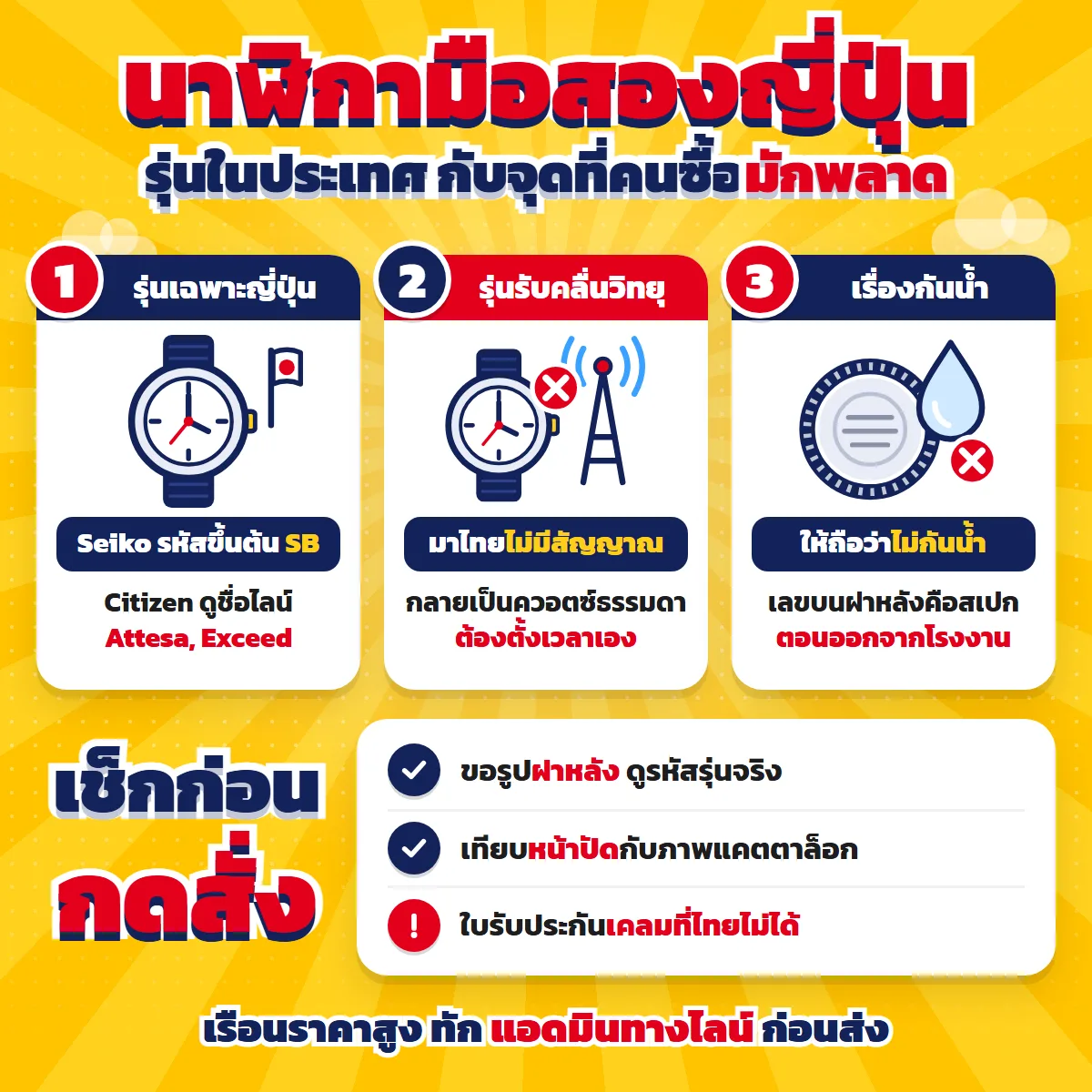
- Used Japanese Watches: Domestic Models and What Goes WrongSeiko and Citizen keep whole lines inside Japan, and the same model name can be a different watch depending on the market it was built for. What a seller can honestly confirm, and where buyers lose money.
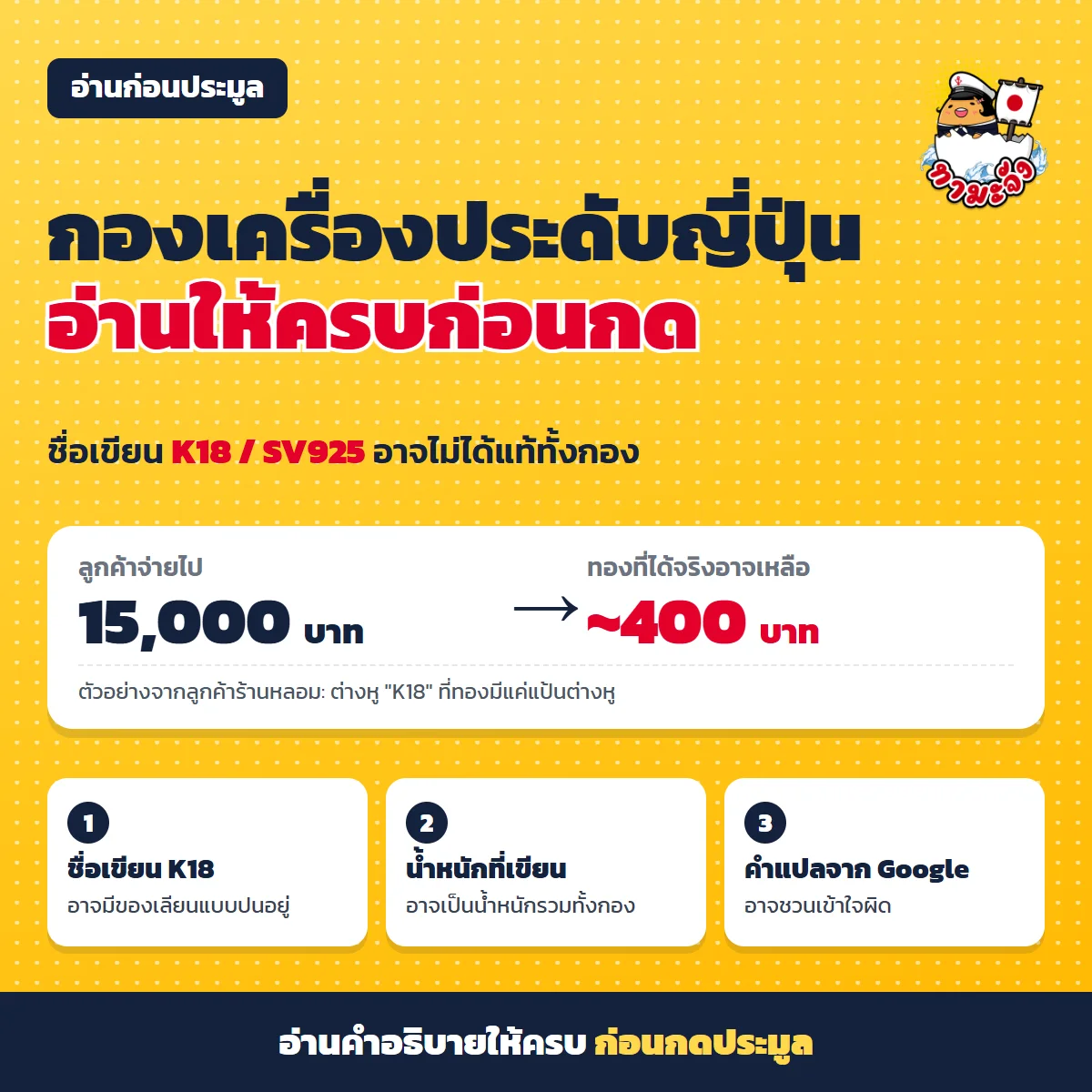
- Japanese Jewelry Lots: Read the K18 and SV925 Marks Before You BidA lot titled K18 or SV925 is not necessarily all gold or sterling. Real Yahoo examples, how to translate the page into Thai, and what to check before you bid.
- How to Order from Mercari: Search, Haggle, Pay and TrackOrder from Mercari Japan yourself on Tama-Chan. No Japanese account needed: just follow the screenshots step by step.

- Service fee and shipping rate tablesCheck the per-item service fee and the sea and air freight rates before you commit
Related keywords
- second-hand Japanese luxury bags
- pre-owned bags from Japan
- Japanese branded resale
Already have a bag in mind?
Browse Japanese listings yourself through Tama-Chan, or message an admin on LINE.