Used Japanese Watches: Domestic Models and What Goes Wrong
Seiko and Citizen keep whole lines inside Japan, and the same model name can be a different watch depending on the market it was built for. What a seller can honestly confirm, and where buyers lose money.
Most people hunting a watch in Japan did not start out looking for a bargain. They started because they found a model no shop in Thailand can order. Seiko and Citizen split their catalogues by market, and whole families are never exported.
A used watch puts two gates in front of you: which market's version you are looking at, and the real condition of that piece. The condition wording Japanese sellers use is already covered in how to read the grades.
The lines Seiko and Citizen sell only in Japan
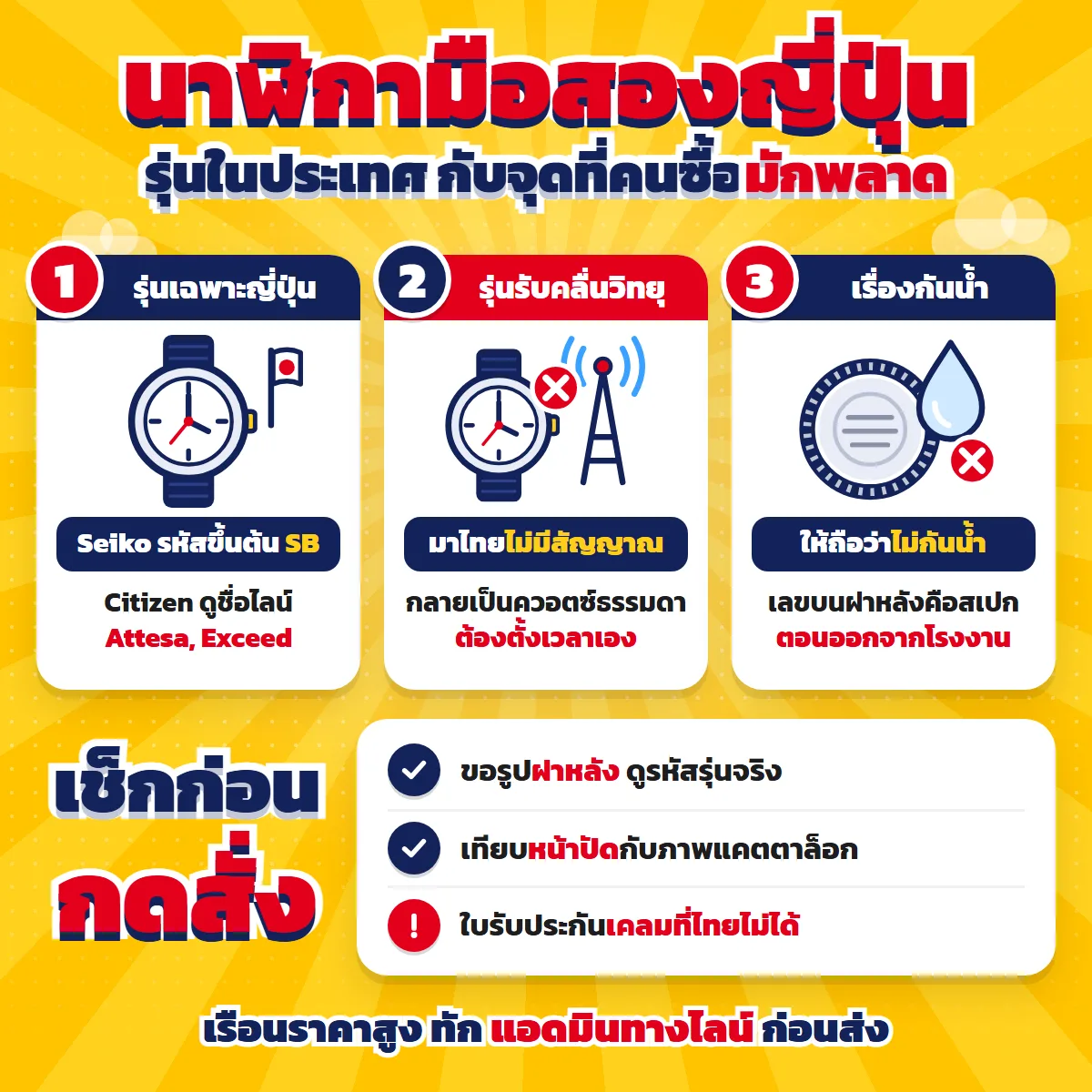
With Seiko, the reference code gives it away fastest. Codes beginning SB - SBDC, SBSA, SARB - were built for the home market, while SPB, SRPD and SNK are the export side. A line like Seiko Selection has never been sold outside Japan.
Citizen reads by line name instead: Attesa, Exceed, The Citizen and Campanola are made for Japan, not names in an export catalogue.
What matters more is that discontinued models still circulate in the second-hand market there, while in Thailand they never arrived at all.
Domestic versus export: what actually differs
The same model name does not guarantee the same watch. The difference that bites hardest in daily use is radio timekeeping. A domestic version only listens for the transmitters in Japan, so here, with no signal to receive, it becomes an ordinary quartz you set by hand. Models that set themselves from satellites work anywhere.
The manual and warranty card in the box are Japanese, and many domestic pieces print the day wheel in Japanese too.
The real reference is engraved on the case back beside the serial. If the listing has no case-back photo, message an admin on LINE to put the question to the seller before you order.
What a seller can confirm, and what needs the case opened
A seller with the watch in hand can tell you plainly that it is running, how many hours they timed it for and how far it drifted, that it winds and sets. On a quartz, when the battery was changed. Asking point by point gets you something to decide on; asking whether the condition is good does not.
A second set of facts needs the case opened: when the movement was last serviced, how worn the mainspring and rotor are. If the listing says nothing about a service, read that as no record.
Water resistance is where buyers slip most often. The figure on the case back is the factory spec, not the state of gaskets that are decades old. Treat it as not water resistant.
Where the money goes: parts, case, warranty
Non-original parts are the cost you cannot see at checkout: a refinished dial, an aftermarket bezel or bracelet. A bracelet can be put back to original; a refinished dial cannot. Compare the dial against catalogue photos of the same reference.
A case polished too many times is the same story. The line between the brushed top surface and the polished flank disappears, and the lugs go thin and round. Look for a photo taken from the side. A seller advertising a freshly polished case is telling you exactly this.
The warranty card in the box cannot be claimed in Thailand. If it needs a watchmaker, that is on you.
Fakes are real, and the expensive brands are the target. What lowers the risk is buying from the established Japanese resale chains that check goods before listing them, and asking for photos of the movement and case back.
Small, valuable, and what that changes about shipping
A watch weighs almost nothing, so freight is not the number to agonise over. What matters is the value declared on the parcel and the liability behind it: a small expensive item hits the ceiling long before a large cheap one does. A parcel lost after it reaches the warehouse is covered to THB 2,000 per tracking number, and damage is not insured at all, so a watch worth more than that is one to raise with an admin before it is sent. The full terms are in the forwarding service guide.
The other call is the original box: if you plan to resell, it has to come home with you.
Frequently asked questions
Read next
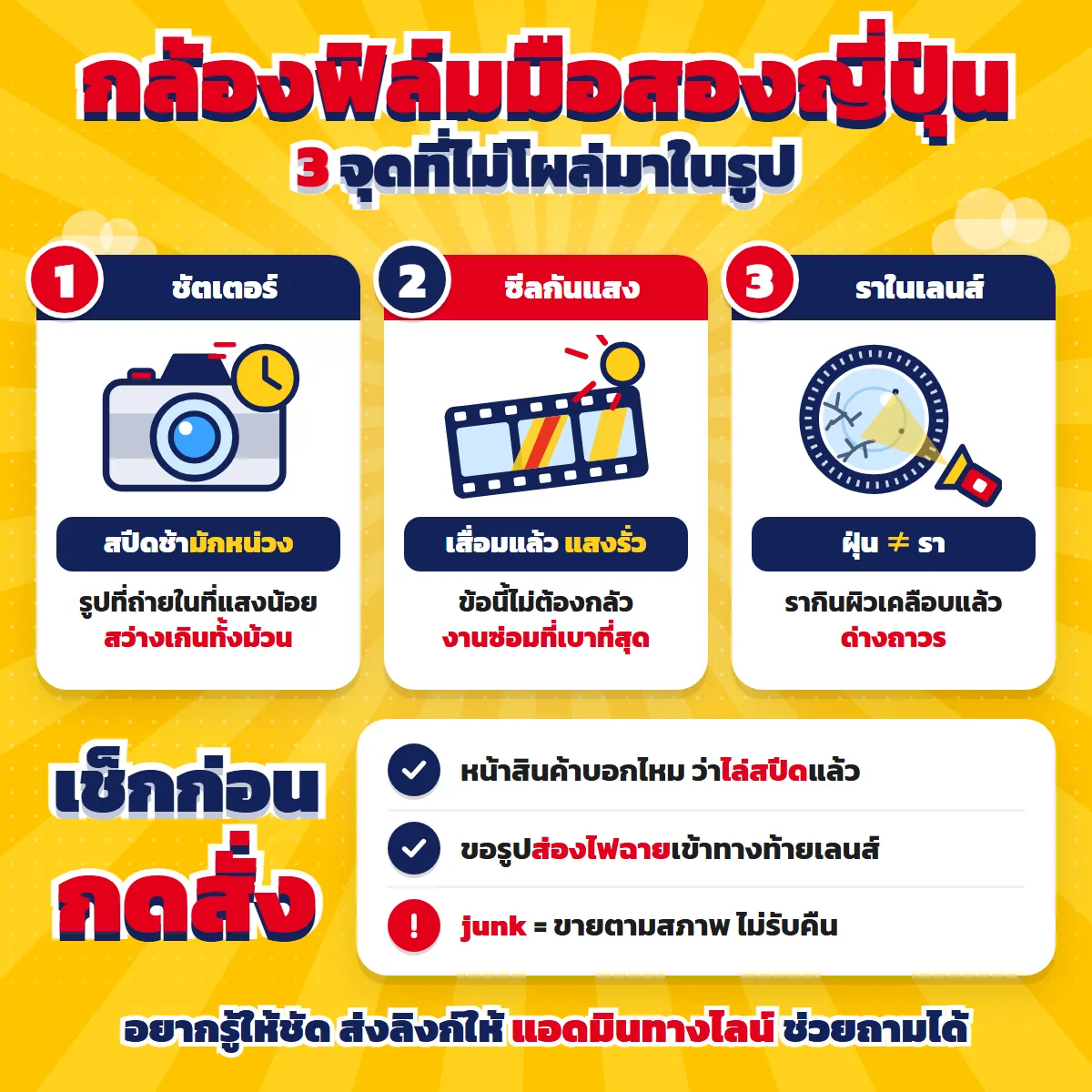
- Second-Hand Japanese Film Cameras: What to Check Before You BuyJapanese shops grade condition and write the faults down. Fungus and haze inside the lens, perished light seals and a shutter running slow are what the grade leaves out, and you have to ask about those yourself.
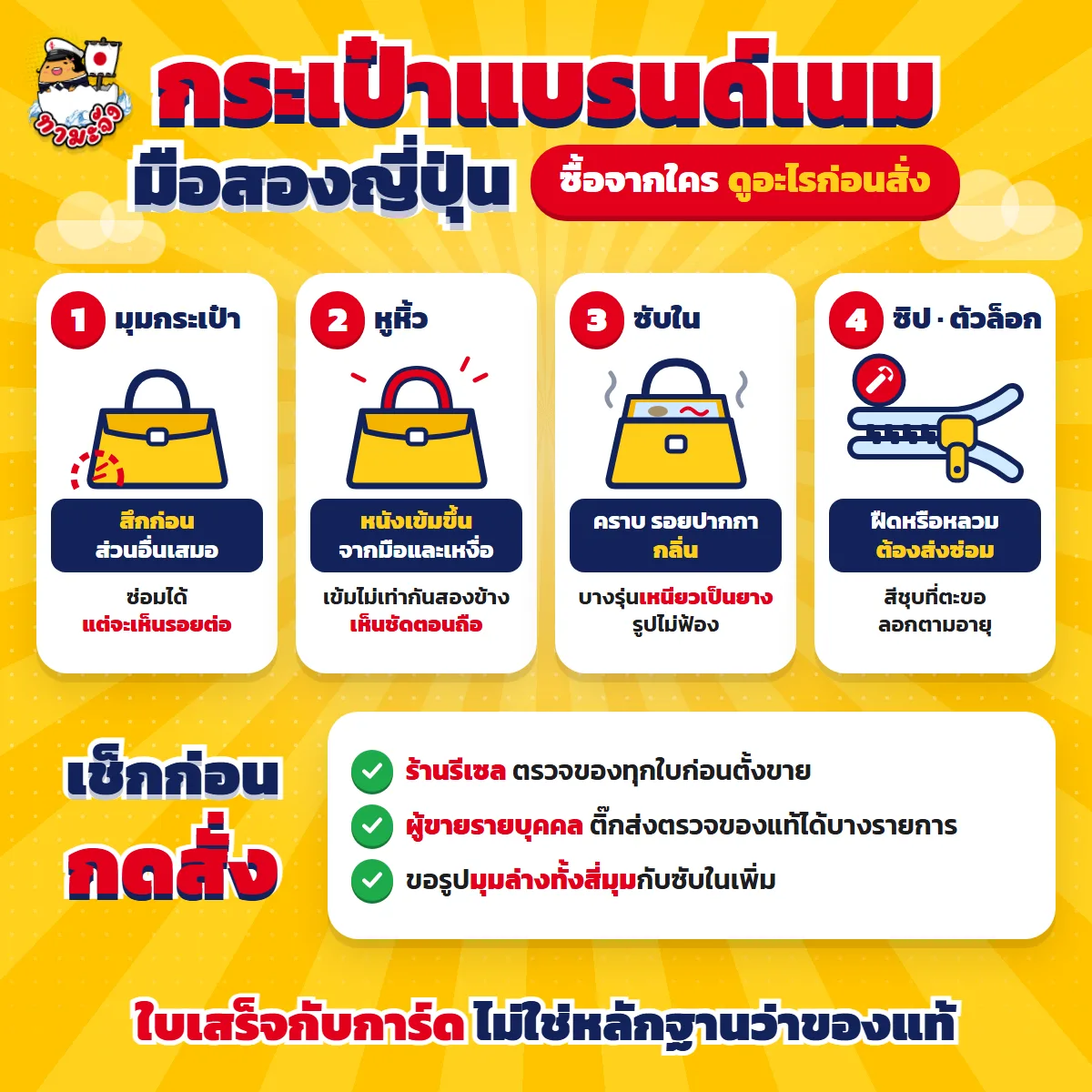
- Second-Hand Japanese Luxury Bags: Who to Buy From, What to CheckJapan's resale shops authenticate every bag before it goes on sale. Private sellers do not. That difference counts for more than any spot-the-fake checklist — then you read the condition write-up.
- How to Order from Mercari: Search, Haggle, Pay and TrackOrder from Mercari Japan yourself on Tama-Chan. No Japanese account needed: just follow the screenshots step by step.

- Service fee and shipping rate tablesCheck the per-item service fee and the sea and air freight rates before you commit
Related keywords
- used Japanese watches
- second-hand Seiko from Japan
- Japanese domestic market watches
After a watch Thailand does not stock?
Search and order Japanese watches yourself through Tama-Chan, or message an admin on LINE.